Helio East UAE
Solar power solutions

The latest solar technology, sourced for the UAE and Africa.

From high-efficiency n-type panels to batteries, inverters and complete systems, we source current-generation solar equipment from leading manufacturers and deliver it with full documentation for homes, businesses, farms and government projects.

Why solar, why now

Our markets have the sun, the demand and the targets.

Diesel is expensive and grids are stretched. In Mali, for example, the utility’s cost of supply is about US$0.357 per kWh because of heavy reliance on fuel-based generation. Solar with storage cuts those costs for good.

World Bank, 2026
3,860 MW

Installed at Dubai’s Mohammed bin Rashid Al Maktoum Solar Park, heading for more than 8,000 MW by 2030

DEWA
28 GW+

UAE clean energy capacity targeted by 2031, up from 14.2 GW, under the UAE Energy Strategy 2050

UAE Ministry of Energy
560M+

People in Sub-Saharan Africa still without electricity, out of 655 million worldwide

Tracking SDG7 2026
60%

Of the world’s best solar resources are in Africa, yet the continent has about 1% of installed solar PV

IEA
What we supply

Everything a solar project needs, from panel to battery.

Specifications below are typical ranges for current products. We confirm exact models, datasheets and certificates with every quotation.

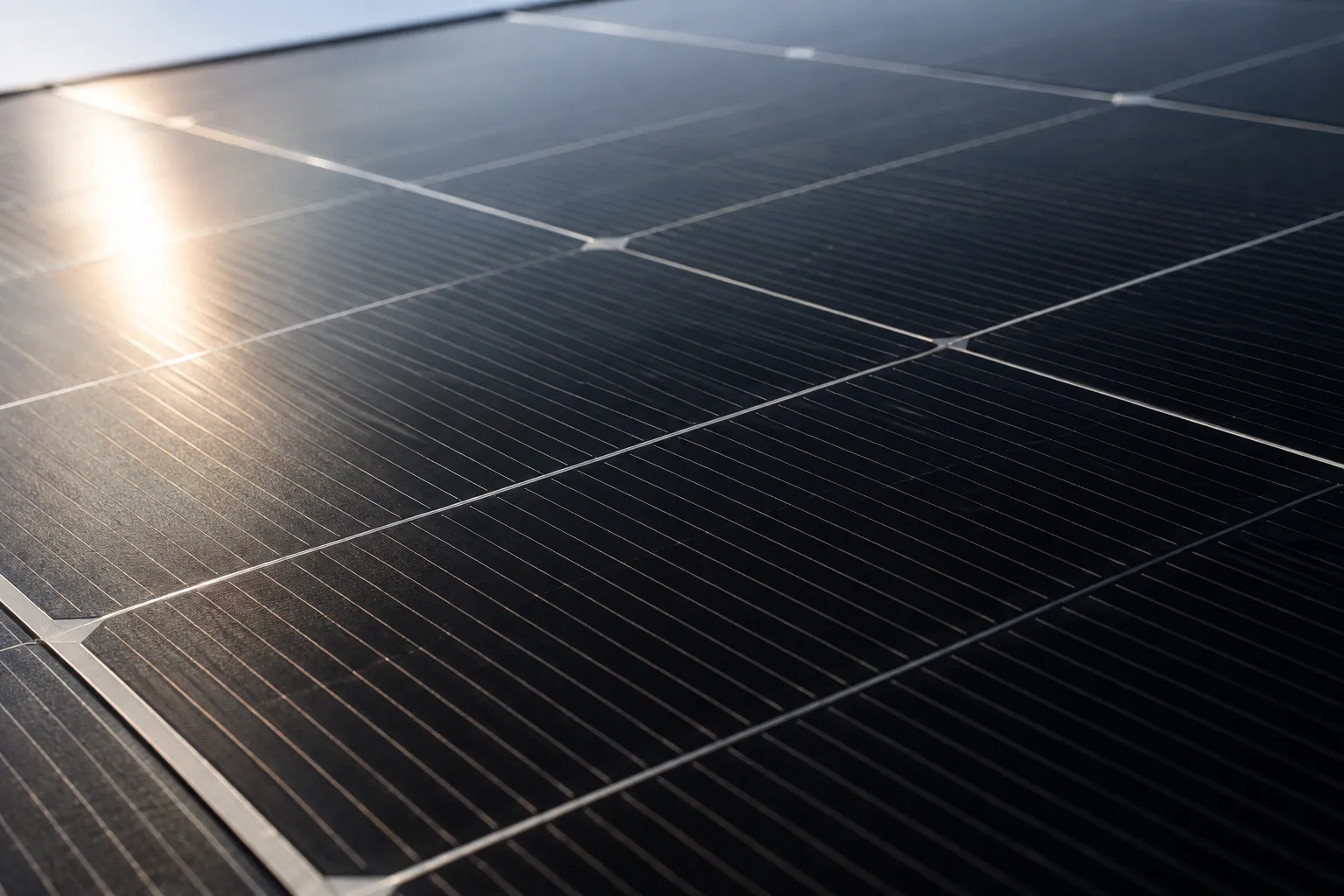
Close-up of an n-type solar panel with fine cell gridlines

High-efficiency solar panels

n-type TOPCon, heterojunction (HJT) and back-contact panels, in all-black rooftop sizes and large bifacial formats for ground-mount projects.

  • About 460–760 W per panel
  • Up to about 24–25% efficiency
  • 30-year power warranties

Solar inverters

On-grid string inverters, hybrid inverters that combine solar, batteries and the grid or a generator, and off-grid inverters for fully independent systems.

  • On-grid 15–125 kW
  • Hybrid 6–100 kW
  • Off-grid 4–11 kW

Home and small batteries

Safe lithium iron phosphate (LiFePO4) batteries that store solar power for the evening and keep the lights on during outages.

  • 5–16 kWh modules, expandable
  • More than 6,000 cycles
  • 12 V and 24 V lead-acid replacements
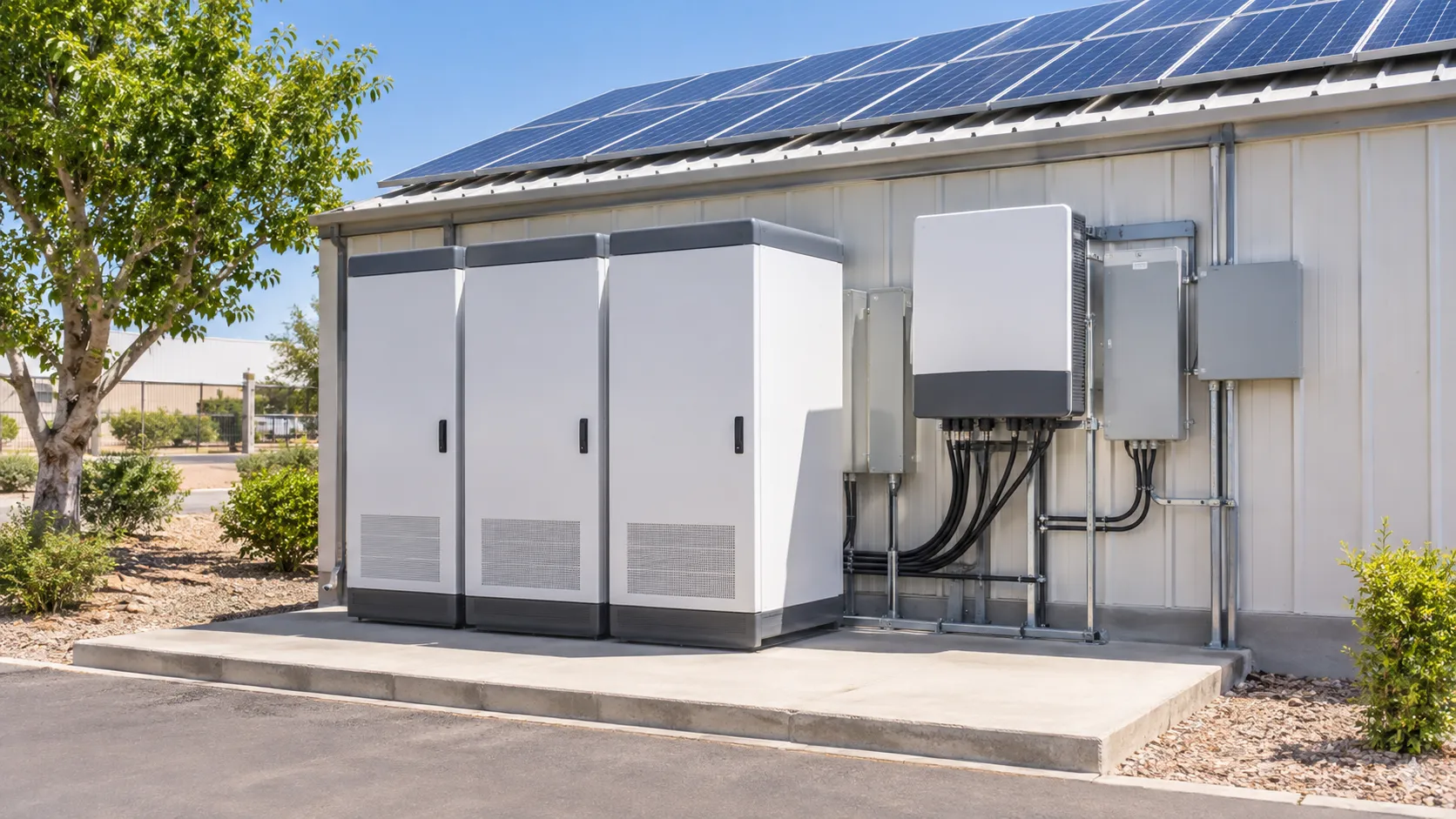
Outdoor battery storage cabinets and a hybrid inverter beside a building with rooftop solar

Commercial and utility energy storage

Outdoor battery cabinets for peak shaving, backup and diesel reduction, plus 20 ft and 40 ft containers for solar parks and microgrids. Liquid-cooled options suit hot climates.

  • Cabinets up to 125 kW / 261 kWh
  • Containers up to 2.4 MWh
  • MW-scale systems

Complete solar systems

Pre-matched packages of panels, inverter, batteries and accessories: hybrid and off-grid kits for homes, and on-grid systems for businesses and public buildings.

  • Home kits 6 kW / 10 kWh to 15 kW / 32 kWh
  • On-grid 15–250 kW
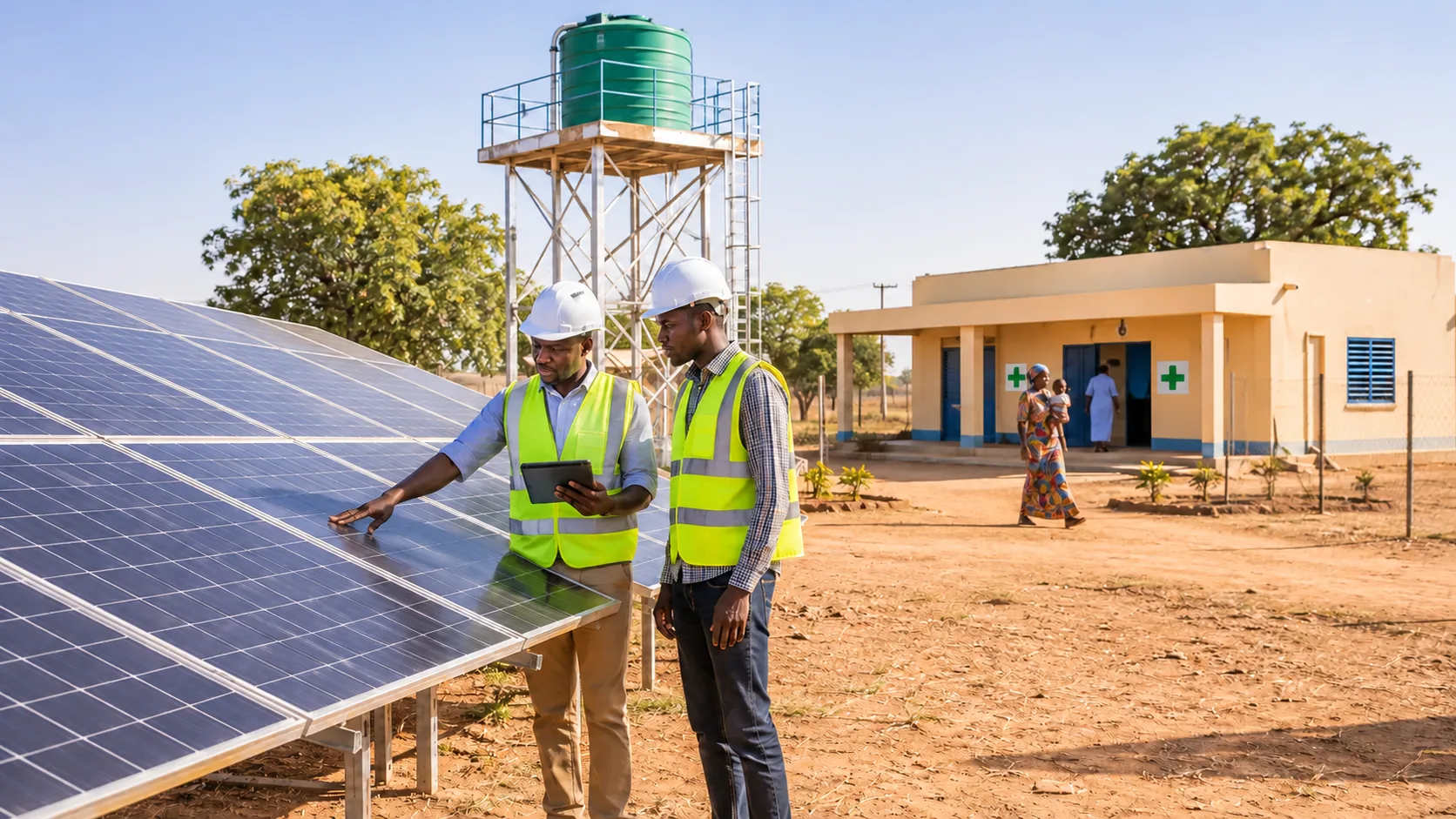
Technicians inspecting a solar array beside a rural clinic and water tower in the Sahel

Solar water pumping

Submersible and surface pumps with controllers that follow the sun, from small village wells to farm irrigation, with no diesel needed.

  • DC pumps 0.12–3 kW
  • AC irrigation 50–100 HP

Mounting structures

Aluminium and galvanised steel structures for ground arrays, flat and pitched roofs, carports and elevated agricultural installations.

  • Ground, roof and carport
  • 10–15 year warranties

Mobile EV fast charging

A wheeled DC fast charger with a large onboard battery, for fleets, events and sites without fixed charging infrastructure.

  • About 209 kWh storage
  • Up to 150 kW DC, CCS2
Sample solutions

What solar looks like for your home, farm, factory or building.

Four typical projects, sized by our team: how much electricity each one uses, how much roof or land the panels need, how big the battery is, and how power flows on-grid and off-grid, day and night.

Indicative examples based on typical Dubai consumption and published solar yields. Every real project is sized from your bills, site survey and grid rules, and installed by a licensed installer or EPC partner.

Technology comparison

Which solar panel technology produces the most power?

How today’s panel technologies compare on efficiency, power, heat performance and lifetime. Figures are typical values from published 2026 datasheets and industry reports, as of November 2026.

MetricPERCLegacyTOPConMainstreamHJTBest in heatBack-contactMost efficientPerovskite tandemEmerging
Commercial module efficiency21–21.7%23.5–24.8%23.5–24.5%24.1–25.5%~24.5–25% (first products)
Power per panel540–560 W620–670 W720–760 W*660–690 W546 W prototype
Heat loss (temperature coefficient)−0.34 %/°C−0.26 to −0.30 %/°C−0.24 %/°C−0.26 %/°CNot yet standardised
Bifaciality (rear-side gain)Mostly monofacial~80–85%~85–90%~70–80%Prototypes only
Degradation2% yr 1, 0.55%/yr~1% yr 1, 0.35%/yr1% yr 1, ~0.3%/yr≤1% yr 1, ≤0.35%/yrStability still unproven
Power warranty25 years30 years30 years30 years~10-year lifetime claimed
AvailabilityBeing phased outWidely availableWidely availableAvailable, premium pricePilot, mass production from ~2027
SourcesITRPV 2026 Datasheet Datasheet TaiyangNews Datasheet Datasheet Datasheet Datasheet pv magazine Trinasolar

* HJT panels in this power class use a larger 3.1 m² format. Scroll sideways to see all technologies on small screens.

Record board

Where the technology is heading

Certified laboratory and prototype records from 2026. These show what will reach commercial panels next; they are not products on sale today.

28.29%

Silicon solar cell world record (back-contact)

LONGi · ISFH · Sep 2026TaiyangNews
26.4%

Crystalline silicon module record

LONGi · NLR · Apr 2026LONGi
25.9%

TOPCon module efficiency

Runergy · NLR · Aug 2026PV Tech
35.5%

Perovskite-silicon tandem cell record

LONGi · ESTI · Jul 2026pv magazine
34.82%

Perovskite/TOPCon tandem cell

JinkoSolar · CAS SIMIT · Jun 2026JinkoSolar
907 W

Tandem module power record, 29.2% efficiency

Trinasolar · TÜV SÜD · Jun 2026Trinasolar
Built for hot climates

Our recommendation for the Gulf and the Sahel

Panels lose output as they heat up, so in our markets the temperature coefficient matters as much as the headline wattage. New n-type panels lose less in the heat, degrade more slowly and carry 30-year power warranties. We no longer recommend legacy PERC for new projects, and tandem panels are not yet proven enough for bankable projects.

TOPCon

Best value

The mainstream choice for most rooftops and solar farms. A TÜV Nord field test measured 5.69% more energy than comparable PERC panels.

TÜV Nord report
HJT

Best in extreme heat

The lowest heat losses of mainstream silicon. In a three-year desert test in Doha, HJT lost about 5% to heat versus up to 9.89% for other panels.

pv magazine
Back-contact

Most power per m²

The highest commercial efficiency, at up to 25%, and a clean all-black look. Ideal where roof space is limited.

TaiyangNews
Any technology, sourced

Whatever the latest panel on the market, we can source it.

Our supplier network gives us access to current-generation equipment from leading manufacturers, so your project is not tied to one brand or one technology.

  1. Your requirement

    Tell us the site, your energy use and whether you are on-grid, off-grid or running on diesel.

  2. Technology and sizing

    We propose the right panel technology, inverter and storage size, and compare options side by side.

  3. Sourcing from leading makers

    Current-generation equipment with datasheets, IEC certificates and manufacturer warranties.

  4. Inspection and shipping

    Pre-shipment checks, export packing and full shipping and customs documentation to the UAE and Africa.

  5. Handover and support

    We work with your installer or EPC partner and support warranty claims after delivery.

Manufacturer names on this page are cited only as sources for published figures and do not imply a partnership. Figures are typical and may change; exact specifications are confirmed with each quotation.

Planning a solar project?

Send us your site details and energy use. We’ll come back with technology options, pricing and delivery timelines.

Request a solar quote